No! You won’t find Kojakovice, in any tour package or even being mentioned as a tourist destination anywhere. You may even find it difficult to look for it on the map, so what is the significance of this small rundown village in Southeast of Bohemia? Read on!
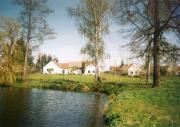
Village Centre from across the pond
Literature is very thin about this little village but ever since the ascension of the Czech Republic into the European Union, serious efforts to boost tourism have been made. Slowly, its history and deep rooted cultures and traditions were uncovered and made known. It turned out that this village was in fact a centre of agriculture since the 14th century and remained strong until the 19th Century.
My research on Czech history revealed that from the 12th century till 1611, most of South Bohemia was under control of the Rozmberk family, an important Czech aristocratic dynasty. Really, it was their insight that gave the landscape its present day appearance. Although, clearing were originally made only to drain the wetlands, and rid of deadly peat bog areas, farmhouses and settlements followed. Fish ponds where soon constructed making fish farming a major industry in the 15th and 16th century. By the 19th century, there were about 80 farms that existed in Kojakovice.
Sadly, these traditional livelihoods could no longer sustain its inhabitants and more and more of its young and educated folk moved away to towns leaving the old in their farmhouses. The decline continues even until now and no more than 150 people live in Kojakovice today. Alas, here lies the perfect serenity of an ancient village, beautiful landscapes untouched by development, no pollution or noise except for the nature sounds of birds and crickets. No wonder, this preserved past is recognized as a Monument Zone within the Trebón Protected Landscape Area and Biosphere Reserve, appropriately conferred not based on monumental buildings associated with nobility, but upon the unique ground plan of the 600 year old village.
Favourite spots:
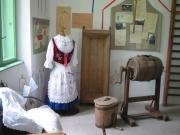
Exhibits in the Pheasant Museum
The Kojakovice Pheasant Museum and Information Center The museum premises was formerly a school built in the mid-19th century. After the second world war, the number of children was too low to fill the two rooms in the school and it was officially closed in 1969. Nearly 30 years later, the Rozmberk Society, started the initiative to create the Museum focusing on how the farmers and pheasants lived and worked in previous centuries in this rural part of South Bohemia, of which Kojakovice is a typical example. Many old and traditional tools are displayed for educational purposes. These are not even machinery or mechanical based but very basic farming instruments. Clothing and traditional costumes are also shown.
The two main rooms house the permanent exhibitions about village life and Czech emigration to the USA. One thing that is of interest is the Chronicle of Kojakovice, which essentially records all important events of both the school and the village. This chronicle provides a good insight of the 100 years of village life.
Besides the exhibition area the museum also has a space for lectures and workshops. The information desk and sales desk provides some opportunity to buy some souvenirs and postcards and some brochures offering information about the museum and the village.
The Center is closed from October 2004 till April 2005 but guided tours are available upon timely request, even during the winter closure. Admission is Free.
What's really great:
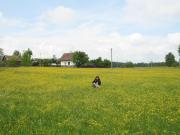
In the Fields
I particularly enjoyed walking along the village outskirts between farmhouses and open fields of yellow blossoms. The weather is mild even in summer. The walk took about 45 minutes before I reached the grounds of the Museum again. I also noted the beauty of the old fish pond in the middle of the village. Not too far from it lies a modest village chapel with a small cottage in the back. These village dwellings do really form a striking contrast to the roomy and large town houses of the Rozmberk Chateau in Trebon.
Sights:
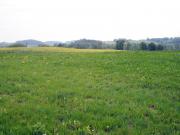
Landscapes as far as the eye can see
Some of the notable sights I captured with my camera are the stunning landscapes as far as the eye can see and several lakes/fish ponds in the middle and surounding the village.
There is also a unique design of houses here and they are called the "Smith's house" - which are typical dwellings for farmers and blacksmiths in the area.
Accommodations:
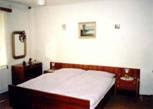
Rooms in the village cottage
There is a small cottage in Kojakoive that is run by Ms. Alena Maxová. The cottage comes with 2 single rooms and bath, complete with living and TV lounge and an equipped kitchen. The cottage is surrounded by a nice landscape garden too. Location wise, the cottage is about 300m from a bus stop and 9 km from a train stop (in Trebon). The nearest shop and restaurant is in also Trebon but then again you should bring your own food supplies if you intend to have an over night stay in this village.
Other recommendations:
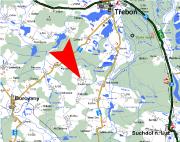
Map indicating Kojakovice - distance from Trebon is 9km.
If you would like to get more information about Kojakovice and the Museum, it is best to contact the Rozmberk Society as they are actively promoting soft tourism in Kojakovice. Their contact information is as follows:-